Pinocchio
Robert Zemeckis - 2022
VFX company : MPC ( London / Montreal, remote from Paris )
Role : Key Artist - Digital matte painter / 3DDMP
Following my return to France, I was invited to join the Pinocchio production at MPC. Working remotely from Paris with MPC London while collaborating closely with artists across London and Montreal, I contributed to the creation of several digital environments and 3D matte painting setups featured throughout the film.
As a Senior Digital Matte Painter, my role extended beyond traditional background creation. The project required combining photography, digital painting, projection workflows and 3D integration to build environments capable of supporting both wide cinematic landscapes and highly detailed close-up shots.
One of the strengths of modern Digital Matte Painting is its ability to bridge artistic direction and production efficiency. Throughout the show, I relied heavily on Nuke's projection workflow, allowing environments and asset enhancements to remain fully integrated in 3D space while supporting evolving creative requirements.

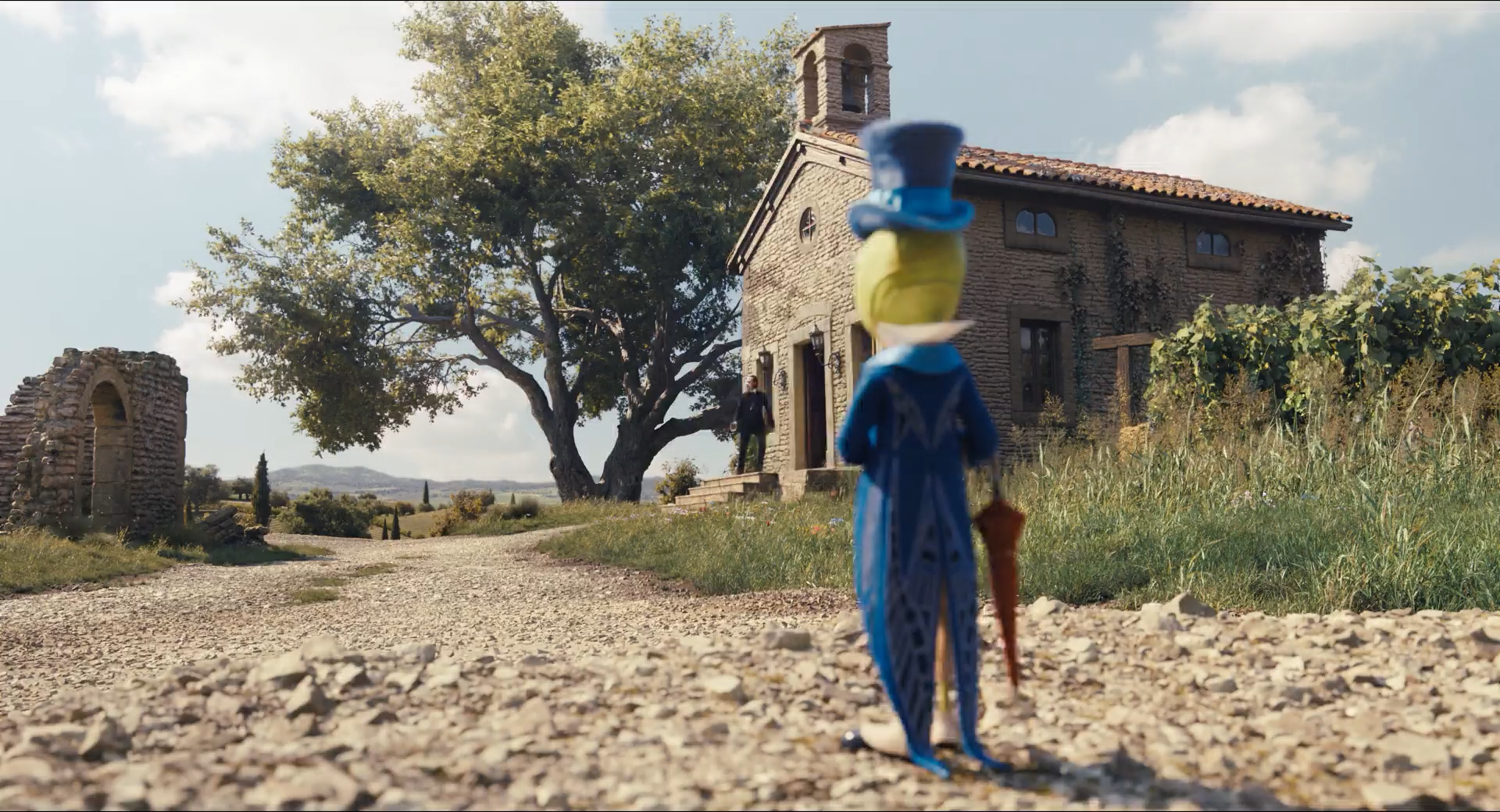
I was responsible for creating and developing a complete environment surrounding the action. As someone passionate about landscapes and environment design, I particularly enjoyed the visual development phase and the attention to detail required to bring this sequence to life.

Unlike traditional matte paintings designed for a single camera angle, these environments needed to support extensive camera movement while maintaining a coherent sense of scale, lighting and atmosphere from every direction.
Using a combination of photographic elements, digital painting and a spherical projection-based workflow in Nuke, I developed a Mediterranean landscape inspired by the Italian countryside. Particular attention was given to depth, vegetation distribution and atmospheric perspective, creating a believable environment capable of supporting multiple shots throughout the sequence.
One of the more unusual technical challenges on Pinocchio involved developing projection-based textures for a wooden asset viewed at the scale of Jiminy Cricket.
At this level of magnification, traditional CG texturing quickly reaches its limits. What would normally appear as a simple wooden dock suddenly fills the entire frame, revealing every surface imperfection and demanding a level of detail capable of holding up under macro cinematography.
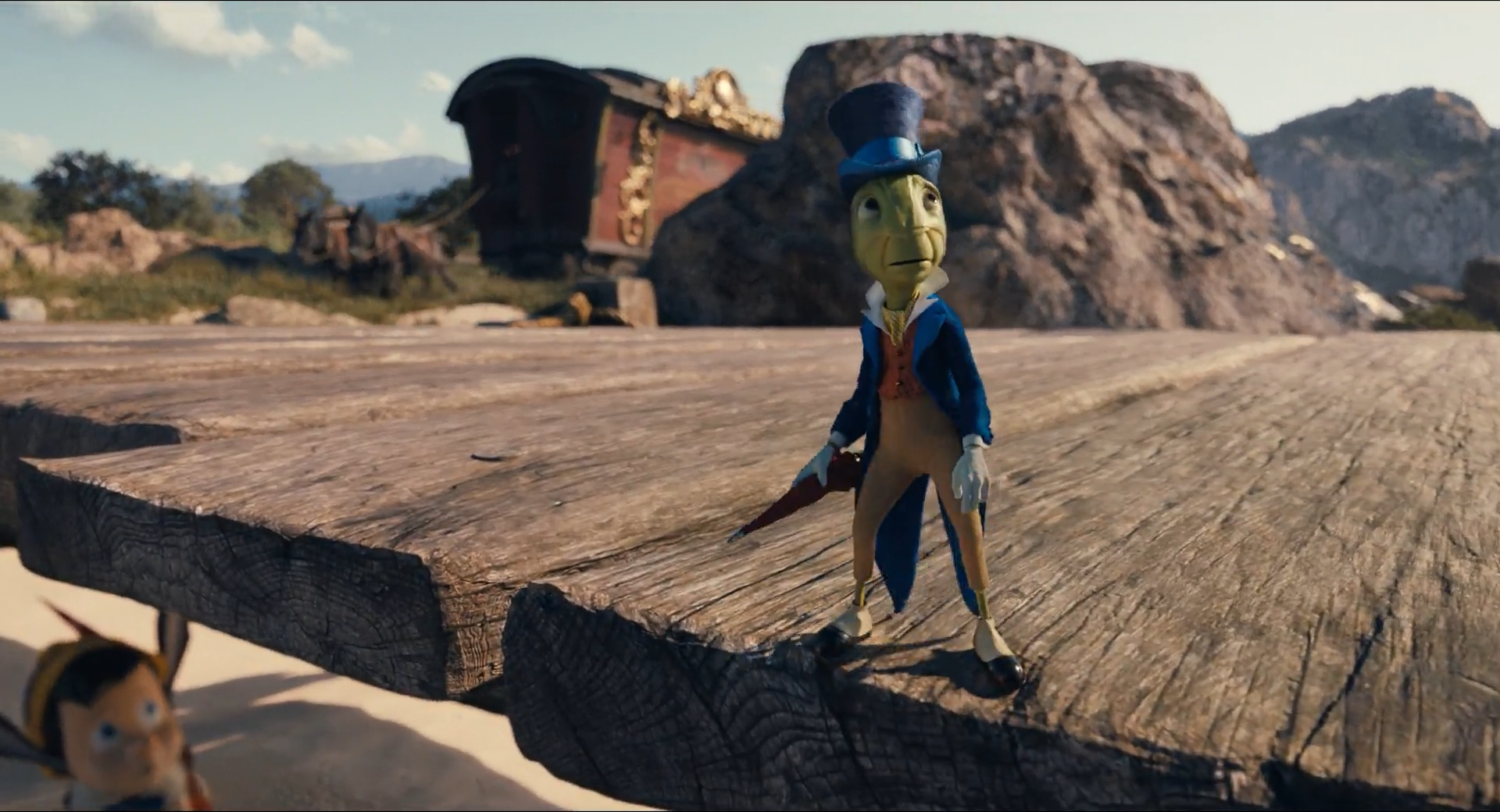
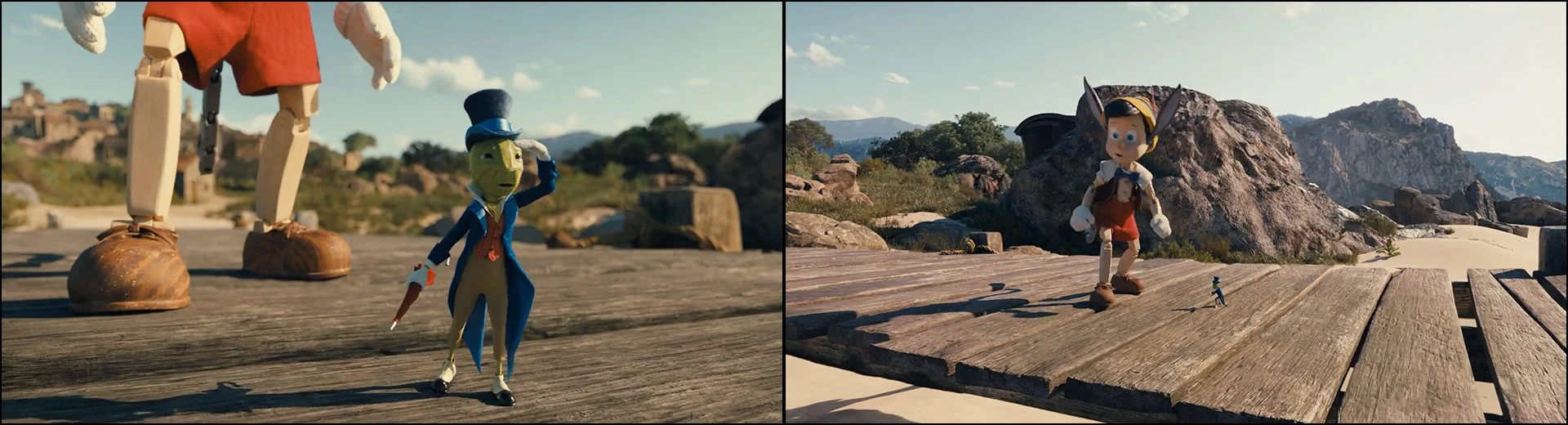
To solve this challenge, I combined my photography background with projection techniques inside Nuke. After scouting local references near my home along the Seine River in Paris, I photographed wooden surfaces specifically chosen for their grain structure, scale and visual similarity to the assets used in production.
Working from the base geometry and renders supplied by the CG department, I built a multi-camera projection setup in Nuke and used photographic textures to re-detail the entire dock structure. The objective was to create a 2.5D asset capable of supporting extreme close-up shots while maintaining consistency across multiple camera angles and throughout the sequence.
These photographs were then transformed into projection setups and integrated directly onto the CG geometry. This approach provided a level of realism, texture richness and natural variation that would have been difficult to achieve through procedural texturing alone, while remaining fully compatible with animation and camera movement.
By combining photography, projection workflows and digital matte painting techniques, I was able to preserve the flexibility of the original CG asset while significantly increasing the amount of visible surface detail, resulting in a believable and production-ready environment capable of withstanding the demanding scale of Jiminy Cricket's world.
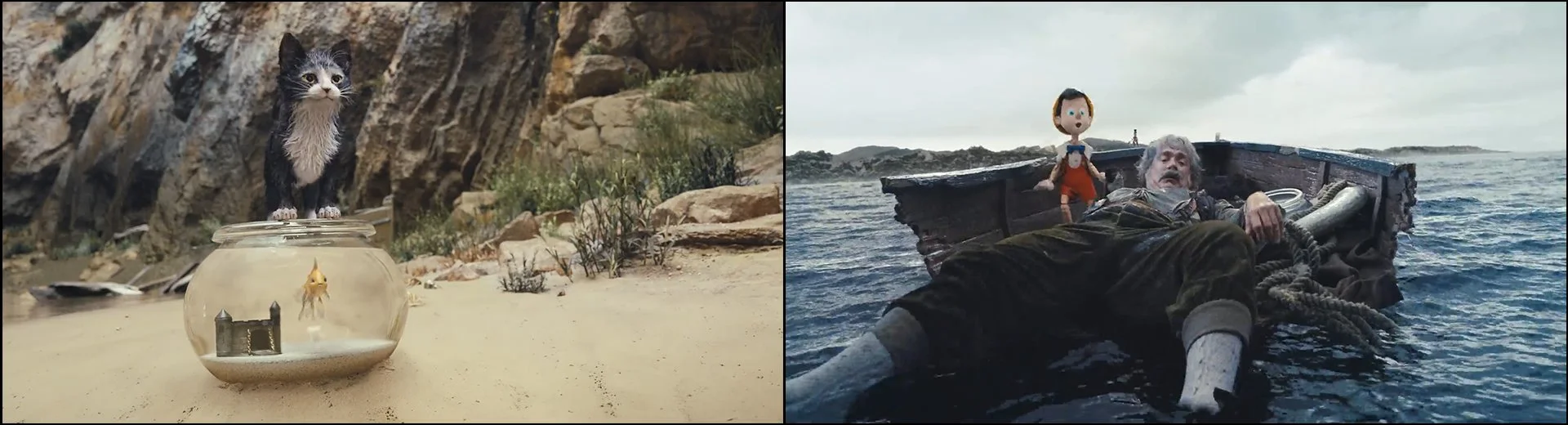
Beyond environment creation, Pinocchio also involved a significant amount of asset enhancement work.
Large-scale productions frequently require additional art direction after modelling and texturing have been completed. Through projection-based paintovers, I was able to add localized detail, improve material definition and introduce subtle storytelling elements directly onto existing CG assets.
Working within projection space allowed these modifications to remain reusable across multiple shots while maintaining perfect perspective consistency. This methodology not only improves visual quality but also provides production teams with a fast and efficient way to increase realism without requiring extensive asset rebuilds.
For me, this workflow represents the modern evolution of Digital Matte Painting: combining photography, painting, projection and 3D techniques into a single flexible toolset capable of solving both creative and technical challenges across a production.